Heyyy guyzzz! 💕
So by now, we’ve already covered a lot — causes, symptoms, effects — and I’m sure things are finally starting to make sense, right? 🙌
But wait… ek important baat —
You know you have PCOS, but do you know which type? 👀
Yup, you heard it right — PCOS has different types! 😮
And the best part? Once you figure out which type of PCOS you have, you won’t have to stress about trying everything.
Matlab no random treatments, just focused efforts and real results! 💪✨
So today’s blog is all about:
“Types of PCOS – Which One Do You Have?” 🧠💗
Let’s get into it, because once you know the type, you can totally slay your PCOS healing journey! 💅🏻
Types of PCOS: Which One Do You Have?
Hey besties! Welcome back to your favorite PCOS series – “Understanding PCOS”. So far, we’ve covered what PCOS is, how it affects more than just your ovaries, its causes, and symptoms that most girls miss. Today’s episode is EP-5: The Different Types of PCOS – and figuring out which one YOU might be dealing with.
Ye topic bohot zyada important hai, kyunki PCOS sab ke liye same nahi hota! And if you’ve ever felt like your treatment or lifestyle changes aren’t working – maybe it’s because you’ve been targeting the wrong type.
Let’s decode all of it – in full detail!
—
🔍 What Is PCOS?
PCOS (Polycystic Ovary Syndrome) is a hormonal disorder that affects how your ovaries function. It causes:
Irregular periods
Hormonal acne
Hair fall or facial hair
Weight gain
Infertility
Anxiety & mood swings
But PCOS isn’t a “one-size-fits-all” problem. Doctors and experts now recognize 4 main types of PCOS, each with a different root cause. Understanding YOUR type is key to healing smarter and living better.
—
💡 Why Knowing Your PCOS Type Matters
Let’s say you’ve been eating clean, doing yoga, taking supplements, and still your periods are late, or your skin is breaking out. That’s frustrating, right?
Here’s the deal: each type of PCOS needs a different approach. Treating inflammation-based PCOS like insulin-resistant PCOS won’t work. That’s why getting the diagnosis and treatment aligned to your type is super important.
—
🌸 The 4 Types of PCOS – Explained
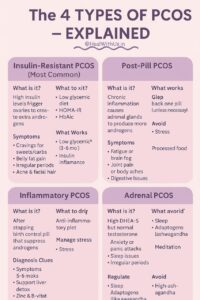
1. Insulin-Resistant PCOS (Most Common)
🔎 What is it?
This is the most common form and is linked with high insulin levels. Insulin is the hormone that helps your body absorb sugar. But when your body becomes resistant to it, your ovaries get triggered to make more androgens (male hormones), leading to PCOS symptoms.
⚠️ Symptoms:
Fatigue after meals
Cravings for sweets/carbs
Belly fat gain
Irregular periods
Acne & facial hair
🧪 Diagnosis Clues:
Fasting insulin test
HOMA-IR index
Blood sugar or HbA1c levels
✅ What Works:
Low glycemic diet (whole grains, protein, fiber)
Cinnamon & inositol supplements
Strength training
Walking after meals
Cutting refined sugar & processed carbs
🚫 What To Avoid:
Too much cardio
Skipping meals
Fruit juices and sugar spikes
—
2. Post-Pill PCOS
🔎 What is it?
This PCOS shows up after stopping birth control pills – especially those that suppress androgens (like Diane-35). Your body “rebounds” and starts producing more testosterone.
⚠️ Symptoms:
PCOS symptoms started after quitting the pill
Delayed periods (2–3 months)
Acne flare-up
Hair fall or facial hair
🧪 Diagnosis Clues:
Symptoms start only after stopping pills
No insulin resistance
Normal inflammation markers
✅ What Works:
Give your body 3–6 months to balance naturally
Support liver detox (leafy greens, broccoli, lemon water)
Zinc, magnesium & B-vitamin supplements
Acupuncture or castor oil packs
🚫 What To Avoid:
Going back on the pill (unless necessary)
Stress & over-exercising
Harsh detoxes
—
3. Inflammatory PCOS
🔎 What is it?
This type is triggered by chronic inflammation in the body. It causes your adrenal glands to produce more androgens, disturbing your hormones.
⚠️ Symptoms:
Fatigue or brain fog
Joint pain or body aches
Skin issues (eczema, acne, hives)
Digestive issues (bloating, IBS)
Cravings & mood swings
🧪 Diagnosis Clues:
High CRP (C-reactive protein) or ESR levels
Food sensitivities (gluten, dairy)
Thyroid dysfunction
✅ What Works:
Anti-inflammatory diet (Omega-3, turmeric, berries)
Reduce gluten, dairy, sugar
Add ginger, green tea, garlic
Stress reduction (yoga, pranayama)
Regular bowel movements (flaxseed, water, fiber)
🚫 What To Avoid:
Smoking or alcohol
Processed/junk food
Skipping sleep
—
4. Adrenal PCOS
🔎 What is it?
This is stress-driven PCOS. It’s not about insulin or inflammation — it’s caused by excess cortisol and DHEA-S (stress hormones). Often seen in Type A personalities or girls under high pressure.
⚠️ Symptoms:
High DHEA-S but normal testosterone
Anxiety or panic attacks
Sleep issues
Irregular periods
Fatigue & hair loss
🧪 Diagnosis Clues:
High DHEA-S levels
Cortisol test (saliva)
Normal insulin, normal inflammation markers
✅ What Works:
Sleep hygiene (7-8 hours minimum)
Adaptogens like ashwagandha, holy basil
Journaling, therapy or meditation
Gentle exercise (stretching, yoga, walking)
Avoid coffee & stimulants
🚫 What To Avoid:
High-intensity workouts
Fasting or keto diets
High-caffeine intake
—
🩺 Mixed PCOS – Yes, That’s Real Too!
Sometimes girls may have a combination of two or more types – like insulin-resistant + inflammatory PCOS. That’s why it’s essential to work with a good gynecologist or hormone specialist who looks at all your labs holistically, not just your ultrasound or period cycle.
—
🧘♀️ How To Find Out Which Type YOU Have?
Take this simple approach:
Step Action
1. Track your symptoms (use apps like Flo, Meesho Health)
2. Get basic blood tests (insulin, DHEA-S, testosterone, CRP)
3. Look at your timeline: When did symptoms begin?
4. Evaluate your lifestyle: Are you stressed? Always bloated? Craving sugar?
5. Try a 2-week experiment with the right diet for your suspected type
—
🍵 Natural Healing Tips – No Matter the Type
Even though PCOS types differ, these 5 natural tips help everyone:
1. Sleep is sacred – Your hormones repair while you rest.
2. Hydration heals – Aim for 2.5–3L of water daily.
3. Stress less – Breathwork, journaling & time offline helps.
4. Move daily – Choose any form: walk, dance, yoga, stretching.
5. Whole foods > processed – Eat close to nature.
—
🧁 Bestie Talk: You Are Not Alone!
We know the journey can be overwhelming. Some days you’ll feel bloated, tired, or low – and that’s okay. You’re healing! PCOS isn’t a life sentence. You just need to understand your root cause, stay consistent, and listen to your body.
—
📌 Final Thoughts
Each PCOS type is unique – like you! Instead of blindly following one-size-fits-all advice, start focusing on YOUR root cause. That’s the shortcut to managing your hormones, skin, weight, and periods naturally.
And hey, remember this always — you’re not broken. Your body is just sending signals. Let’s learn to decode them together 💗
—
✨ Let’s Wrap It Up – But Not The Series!
If this blog helped you even a little, like, comment, or share it with another sister struggling with PCOS. In our next blog, we’ll dive into how to treat
Leave a Reply