(Episode 7 of PCOD Diet Series)
Heyyy gurly pops! 💖 Welcome back to your safe and happy space – where we decode PCOD one step at a time. This is Episode 7 of our PCOD Diet Series and today, we’re focusing on something super fresh, juicy, and oh-so-nutritious – Fruits and Vegetables!
I know, I know… your doctor or dietician probably told you, “Eat more veggies and fruits!” but what does that even mean in PCOD terms? Not all fruits and veggies are equally friendly when it comes to balancing your hormones, controlling insulin spikes, or managing weight gain. In this blog, I’ll break down the Top 10 PCOD-friendly fruits and vegetables that actually help manage symptoms naturally.
So gurl, grab your green tea, sit back, and let’s get glowy, naturally! 🌿
—
Why Are Fruits and Vegetables Essential in PCOD?
Before we jump into the list, let’s understand why you need fruits and veggies in your PCOD meal plan:
✅ Packed with antioxidants that help fight inflammation.
✅ High in fiber which keeps you fuller longer, reducing overeating.
✅ Help regulate blood sugar levels, especially low-GI options.
✅ Support gut health, which is super important for hormonal balance.
✅ Natural source of essential vitamins and minerals (like magnesium, potassium, vitamin C).
Top 10 PCOD-Friendly Fruits and Vegetables
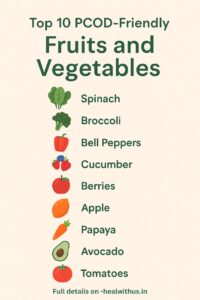
1. Spinach (Palak) – The Iron Queen!
Spinach is rich in iron, magnesium, and folate – essential for hormone health. It’s low in calories and high in fiber, making it perfect for weight management.
How to Include:
Add to your rotis (palak paratha).
Blend into smoothies.
Add to your daal.
PCOD Tip: Avoid overcooking spinach to preserve its nutrients.
—
2. Broccoli – Your Estrogen-Balancing Buddy!
Broccoli belongs to the cruciferous family and helps in detoxifying excess estrogen from your body – which is crucial for PCOD/PCOS management.
How to Include:
Lightly steam and toss with olive oil.
Add to stir-fries.
Blend into soups.
3. Bell Peppers (Shimla Mirch) – Vitamin C Booster
Rich in vitamin C, bell peppers help reduce oxidative stress, which is often high in PCOD women.
How to Include:
Chop into salads.
Stir-fry with paneer.
Use in wraps.
Bonus: They’re crunchy and colorful – which automatically makes eating veggies more fun!
—
4. Cucumber (Kheera) – Hydrate + Glow!
Cucumber is 95% water! It’s perfect for hydration and detoxification, which helps in reducing bloating – a common PCOD problem.
How to Include:
In salads.
As detox water.
With yogurt dip as a healthy snack.
—
5. Berries – Antioxidant Bomb!
Be it strawberries, blueberries, or raspberries – berries are low in sugar and high in antioxidants. They help fight inflammation, stabilize insulin levels, and reduce cravings.
How to Include:
Handful of fresh berries as snacks.
Blend into smoothies.
Top on Greek yogurt.
6. Apples – Fiber + Low Glycemic Snack
An apple a day? For PCOD, yes! Apples are rich in pectin, a fiber that promotes gut health and blood sugar control.
How to Include:
Fresh slices with peanut butter.
In salads.
As a mid-morning snack.
7. Papaya – Natural Detox Fruit
Papaya helps regulate periods naturally, reduces bloating, and promotes digestive health – making it a top choice in PCOD diets.
How to Include:
Raw papaya salad.
Cubed papaya as evening snack.
Papaya smoothie (without added sugar).
Important: Avoid if pregnant or trying to conceive, as excessive papaya isn’t recommended.
8. Carrots – Beta-Carotene Power!
Carrots are loaded with beta-carotene, which helps balance hormones and reduce oxidative stress. Plus, they’re super filling.
How to Include:
Grated in salads.
In soups.
Carrot sticks with hummus.
—
9. Avocado – The Healthy Fat Fruit
Avocados are rich in monounsaturated fats, which are hormone-balancing fats. They help reduce belly fat, improve insulin sensitivity, and nourish skin.
How to Include:
Smashed avocado toast.
Avocado smoothie.
Avocado slices in salad.
10. Tomatoes – Rich in Lycopene
Tomatoes help reduce inflammation and oxidative stress thanks to lycopene, a powerful antioxidant.
How to Include:
Fresh in salads.
Homemade tomato soup.
Add to curries.
—
Quick PCOD-Friendly Veggie and Fruit Chart
Fruit/Vegetable Benefit How Often?
Spinach Iron, Magnesium 4-5 times/week
Broccoli Estrogen Detox 3-4 times/week
Bell Peppers Vitamin C Daily
Cucumber Hydration Daily
Berries Antioxidants 2-3 times/week
Apple Fiber 4-5 times/week
Papaya Digestive Health 2 times/week
Carrot Beta-Carotene 3-4 times/week
Avocado Healthy Fats 1-2 times/week
Tomato Lycopene Daily
—
Foods to Avoid (Quick Reminder)
While adding these PCOD-friendly fruits and vegetables, remember to avoid:
Fruit juices (too much sugar).
Bananas in excess (high glycemic load).
Mangoes (limit during weight gain phase).
Potatoes and starchy veggies in excess.
—
Conclusion – Let’s Eat Colorfully to Heal Naturally!
So girl, remember:
🌸 The more colorful your plate, the healthier your hormones!
These top 10 PCOD-friendly fruits and vegetables are not just delicious – they’re your natural medicine. Building your daily meals around these can help you feel lighter, happier, and more energetic.
Consistency is key. You won’t see results in a week – but stay committed, and your body will thank you. Managing PCOD isn’t about harsh diets or complicated plans. It’s about nourishing yourself, lovingly and mindfully. 💕
—
💬 Tell me in comments – which veggie or fruit are you adding to your PCOD plate today?
If this blog gave you even 1% value, do drop a 🌿 or 🍎 emoji in the comments!
Share it with your bestie who’s also struggling with PCOD – because health is better shared!
—
Ready for Episode 8?
Stay tuned for the next blog where we’ll discuss Herbal Drinks for PCOD – Natural Sips for Happy Hormones!
For more PCOD-friendly recipes, tips, and motivation – check out my website! ✨
👉 www.pcodguidegirl.in
—
Remember, small steps bring big changes.
Like. Share. And Heal Together! 💖
Leave a Reply